
Are internal communicators supposed to be neutral? I hope not.
I saw a post recently about IC being positioned as a “neutral party.” I understand the intent, but it doesn’t reflect the reality of the work.
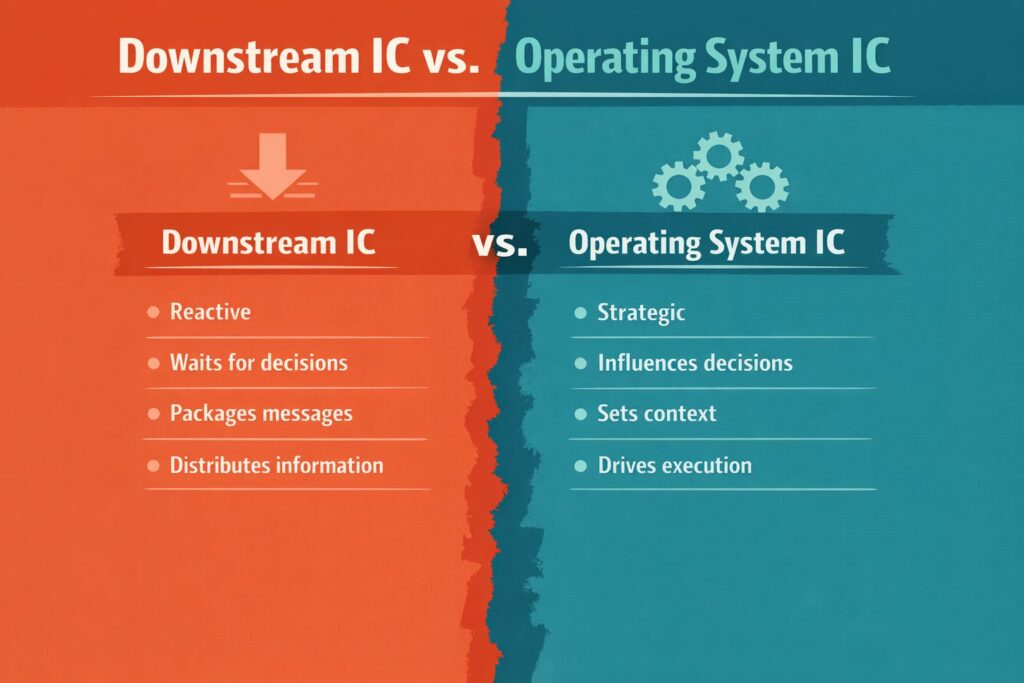
It reflects a version of the role that sits downstream — and that’s the problem.
Internal communication is not journalism. It’s part of the organization’s operating system.
The job is not to objectively relay information. The job is to ensure decisions turn into coordinated action.
That means:
— translating strategy into clear direction
— aligning leaders and teams around what matters most
— sequencing communication so people can absorb and act
— removing confusion and friction before it slows execution
None of that is neutral work. Neutrality keeps IC in a reactive posture:
— waiting for decisions
— packaging messages
— distributing information
Strategic IC operates upstream. It shapes how decisions are introduced, understood, and carried forward across the organization.
It asks:
— Are we clear on what we’re solving for?
— Will this land the way we think it will?
— What do people need in order to act?
— Where will this break down in execution?
The risk isn’t that communication isn’t balanced. The risk is that the organization doesn’t move.
That’s where IC creates value — not as a neutral party, but as a function accountable for turning strategy into action.
Neutrality isn’t just a false reflection of the role. It’s a constraint on it.
If we want IC to be taken seriously as a strategic discipline, we have to stop positioning it as neutral and start owning its role in how the business actually runs.