
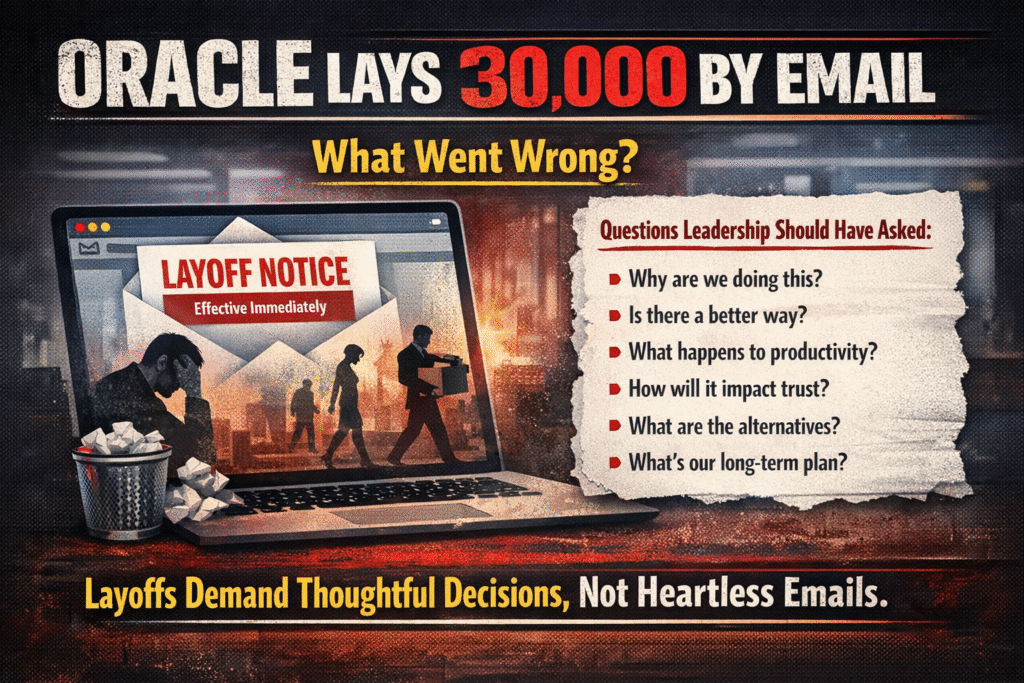
There’s been a lot of backlash about Oracle Corporation laying off 30,000 employees via email this week.
The concern is warranted.
Laying off employees through a memo — no notice, no conversation — isn’t just inhumane. It’s bad business.
But most of the conversation stops there.
What’s missing is what should have happened instead.
If I were advising leadership, I wouldn’t have started with messaging. I would have started with the decision itself:
— What is actually driving this?
— What are we trying to accomplish?
— Is cutting 30,000 jobs the best way to get there?
— How will we absorb the loss in productivity?
— What happens to trust, inside and outside the organization?
— What are the alternatives?
— What happens when we need to hire again?
If, after that process, layoffs were still necessary, then the work becomes designing a communication approach that reflects the weight of the moment.
That means:
— Being clear on who needs to know what, when
— Choosing the right channels for each audience
— Equipping leaders to have real conversations, not just forward messages
— Supporting both impacted employees and those who remain
The goal isn’t to make a decision like this feel good. It’s to handle it in a way that preserves dignity, maintains trust, and protects the organization’s long-term ability to function.
This wouldn’t have been easy. It wouldn’t have been perfect.
But it would have been far better than a single, sweeping announcement that damaged employees, morale, and brand — all at once.